
Getting Around Without a License: What Job to Aim for Without Holding Yourself Back
Hi, it’s Cyril. If you don’t have a driver’s license, first aim for a job at a fixed location that you can get to on your schedule: retail, reception, administration, food service, or remote support, depending on your skills. The key factor isn’t just the job itself, but the actual commute and the travel required during work.
What to do right away:
- Identify areas with good public transport links to limit your constraints.
- Assess active travel options: cycling, walking, carpooling.
- Focus your search on local jobs that don’t require a driver’s license.
- Consult specialized resources to learn about jobs you can do without a driver’s license.
- Try transport apps to better plan your daily journeys.
To find local solutions, visit the official service My employment mobility assistance. An adviser can also help you explore public transport, carpooling, or mobility support options in your area.
Getting around without a driver’s license: options that open doors to employment
In general, people think that without a driver’s license, professional opportunities are drastically reduced. Yet 2026 offers a range of ways to get around this obstacle. First, public transport remains a solid option. Buses, trams, metros, and trains serve urban and suburban areas extensively, making it easier to get to a local job without needing your own car.
Check the first departure, the last return service, and the Saturday and Sunday timetables. A warehouse served by public transport at 9 a.m. may be inaccessible if your shift starts at 5 a.m. Factor in the walk from the stop to the site entrance, then plan a backup in case of cancellations.
In rural areas, look for regular carpooling, an on-demand transport service, or a site you can safely reach by bike. Don’t assume that a so-called “no-license” car is available to anyone without restrictions: the rules depend on the vehicle and the driver’s situation.
Active travel: cycling, walking, and the freedom to get around
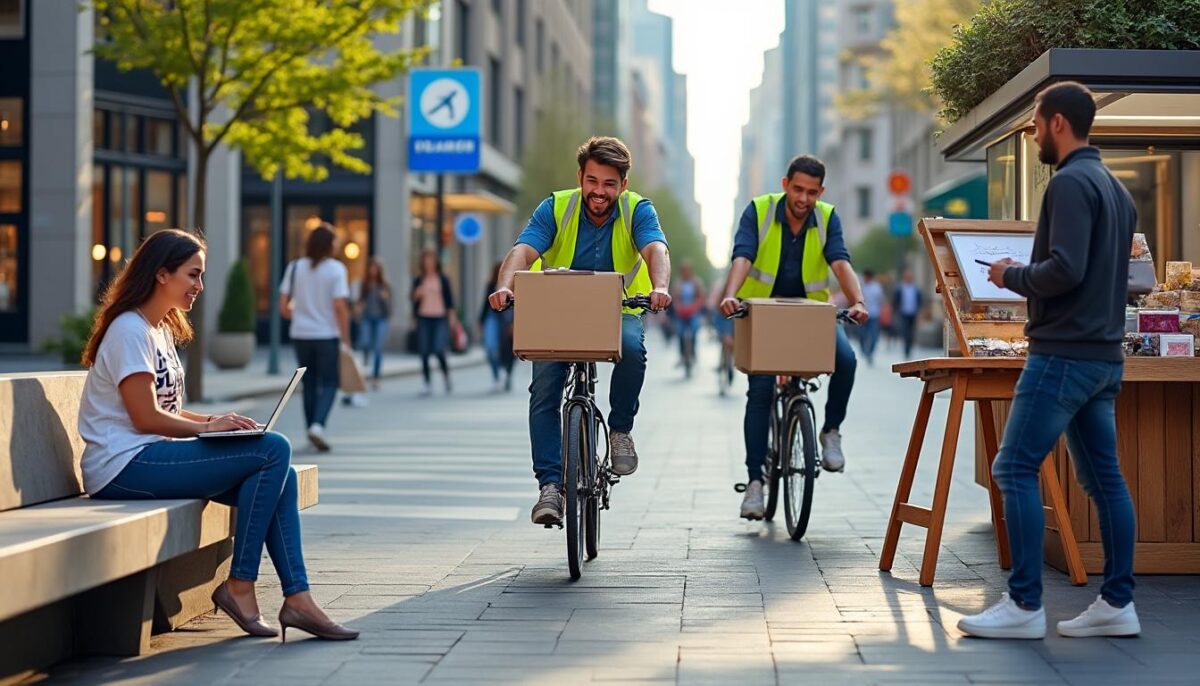
For a nearby job you can get to easily, cycling and walking are valuable options. In urban and semi-urban areas, these choices often offer more flexibility than you might think. An electric bike, for example, makes longer distances more manageable, even on hilly terrain. Not to mention the physical and mental health benefits, which can boost productivity.
For example: if the job is five kilometres away, try the round trip at the time you’d need to travel before your interview. Note how long it takes, the lighting, the equipment you’ll need, and an alternative for days when cycling isn’t possible.
The best argument is a practical one: “I can be there by 8 a.m. using this route, and I have this backup option.” That’s more useful than a general promise that you’re available.
Tailor your job search: where and how to look for work without a driver’s license
Consider jobs in retail, reception, on-site order picking, administrative assistance, or IT support. Requirements vary: a field service technician may need to drive, while an on-site technician won’t have the same travel requirements. Check each job posting rather than assuming an entire sector is accessible without a driver’s license.
Here’s a practical list to guide your search:
- Local jobs near public transport
- Jobs at a fixed retail location or warehouse, depending on the hours and duties
- Support technician, IT support
- Service worker or multi-skilled operator in a company
- Jobs in culture, communications, or social work
Adapting means planning ahead. Also consider clearly explaining your situation during interviews and how you manage your mobility. This often reassures recruiters and builds trust.
What questions should you ask before applying?
“Will the job be based at the same location? What are the exact hours? Is a driver’s license required for the duties, or is it only mentioned in relation to commuting? Is there a shuttle or organized carpooling?” For temporary work, make sure the location and hours are confirmed for each assignment.
The 3-step process for landing a job without a driver’s license
- Step 1: Assess your surroundings to identify the transport options that are actually available to you.
- Step 2: Look for job postings that fit your mobility needs, prioritizing flexible and local work.
- Step 3: Prepare to explain your alternative transport arrangements in interviews and suggest practical solutions (e.g., adjusted hours, carpooling).
If you’re in a large city, make the most of public transport and shared mobility services. If you’re in a suburban area, prioritize active travel and collaborative mobility options.
Working from home and online training: overcoming the geographical barrier
Remote work can reduce commuting, but “remote work possible” doesn’t mean 100% remote. Ask how often you’ll need to be on-site, where initial training takes place, and whether you’ll need to travel to meet clients. These jobs also require the right skills, equipment, and workspace.
Online training doesn’t guarantee a work-from-home job. Before paying, check the prerequisites, the qualification you’ll earn, job prospects, and the actual arrangements for the jobs. For a remote job posting, don’t pay money to unlock an assignment, and verify the company’s identity: France Travail outlines the signs of fake job offers.
If you’re considering remote freelance work, be sure to distinguish freelancing from salaried employment: you’ll also need to find clients, issue invoices, and manage your income. FreelanceFlowHub’s advice on organizing a freelance business can help you explore this option without presenting it as a guaranteed immediate solution.
Comparison table of jobs by whether a driver’s license is required
| Job | Driver’s license required | Frequency of travel | Alternative transport possible |
|---|---|---|---|
| Home care worker | Often essential | Frequent, varied | Rarely, except in urban areas with good transport links |
| Maintenance technician | Often required for field work; check for fixed-site roles | Many service calls each day | Not well suited to people without a driver’s license |
| Retail assistant | No | Low, on-site | Suitable |
| Administrative assistant | No | Rare | Highly suitable |
| IT technician | No | Variable | Suitable with remote work |
Which sectors hire people without requiring a driver’s license?
Local retail, skilled trades, digital work, and administrative or retail jobs often hire people without requiring a driver’s license.
How can you get around without your own car?
Use public transport, a bike, walking, or carpooling, and identify the alternative transport options available in your area.
Is remote work a viable option if you don’t have a driver’s license?
It can reduce commuting if the job is genuinely remote. Check required on-site attendance, travel, and initial training.
Do you have to say in an interview that you don’t have a driver’s license?
It’s better to be transparent to show that you’ve thought ahead and have practical solutions to offer.
Can you really progress professionally without a driver’s license?
Yes, by targeting suitable sectors and using alternative transport, you can build a solid career.
Thanks for your continued interest; Cyril